












The Ripple Effect

Nick Churton of Mayfair Office offers an explaination of the "ripple effect" on the property market.
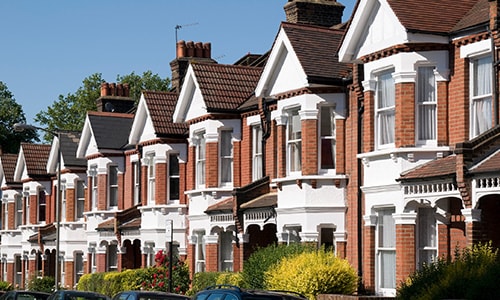
The 'ripple effect’ is an expression that describes the effect that the London property market has on the rest of the UK. Historically, what happens in London eventually radiates into the rest of England, Scotland and Wales. The areas and counties closest to London are the first to feel the warmth or chill of change. The extremities of the British Isles have traditionally felt the dissipated and weakened ripples somewhat later.
But now we live in a rather different age. London does not dictate the UK market so much. The UK has become more homogeneous and more subject to offshore pressures as globalisation has an increased effect on national economies. We have seen this from the US recently where the sub-prime debacle kick-started what many industry insiders believe is the sharpest UK property market slowdown in the living memory of most people. This includes the market busts of the ‘70s, ‘80s and ‘90s.
So the ripple effect has less significance today than it ever did, and London has refined its own market hierarchy through lifestyle and convenience.
In fact London has never been one market. London, which covers 627 square miles, has as many markets as it has towns, villages, postcodes, neighbourhoods, streets, sides of streets and end of streets. Plus it has prime, super-prime, extra-super-prime and so-unbelievably-extra-super-prime that no one can quite fathom why anyone would pay £100 million for an apartment except its buyer. In property terms London is divided into the haves, the have nots, and the Russians, who now seem to have more than anyone else.
But the current property downturn in the UK is certainly having a detrimental effect on London’s many property market sectors. There is hard evidence of price reductions of up to twenty per cent in some areas, and sales volumes are down by over fifty per cent. It is only at the very top of the market, at figures over £10 million, where matters are not only stable but in some areas confound the market and are still on the increase.
But the movement of buyers and sellers between London and its neighbouring counties continues, not as a ripple but as an ebb and flow. Young professionals often start their working lives living in London where they have demanding careers and can be close to their places of work. Later, coupled and looking to start a family, the benefits of an out-of-town life begin to have their attractions. So if there is a ripple it is not so much a commercial one but a human one.
The globalisation of the property market means the live/work balance is today more crucial than ever before, not just for Britons but for the many buyers who have business, lifestyle and diplomatic reasons to move on an international basis. Now that is a ripple effect!
Share on social media


