British Architectural Styles

Modernism (From 1900)
Modernism, British Architectural Style

The Modernist movement in architecture grew from the beginning of the 20th century. It was a style that was linked notably with Le Corbusier, Mies van der Rohe and Frank Lloyd Wright. They, and other modern architects, reacted against the architecture of the 19th century, which they believed leant too heavily on the past. As the 20th century began they believed it was necessary to devise a style that echoed the spirit of the new age and would embrace the radical opportunities offered by new materials... read more

Edwardian (1901-1914)
Edwardian, British Architectural Style

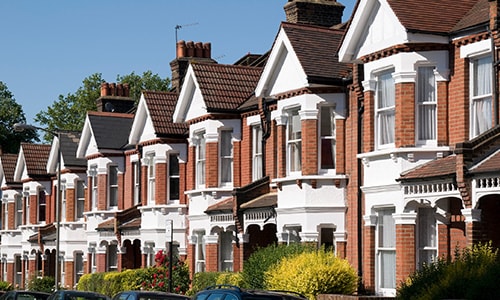
The clash of styles in the Victorian period finally ended in an eclectic aesthetic. The death of Queen Victoria in 1901, after almost 64 years on the throne, presaged a rush of new ideas including the birth of the Garden Cities and the growth of suburbia... read more

Victorian (1837-1901)
Victorian, British Architectural Style

Queen Victoria's reign saw great changes both inside and outside the home. It was the time of the Industrial Revolution and Britain was leading the world in technology. Mass production meant more goods were available to buy. The newly-emerging middle classes took immense pride in homes that they saw as a reflection of their social status... read more

Regency (1790s-1837)
Regency, British Architectural Style

Despite a crisis in the monarchy when George III's insanity rendered him unfit to rule, and the Prince of Wales - later George IV - was made Regent, the Regency period in Britain saw a flowering in the arts. In literature the period marked the height of the Romantic Movement noted by poets including Byron, Keats, and Shelley... read more

Georgian (1715-1790s)
Georgian, British Architectural Style

The Georgian period generally covers the eighteenth century. But the style of architecture most commonly associated with the Georgian era is more strongly identifiable in the period between 1715 and about 1790... read more

William and Mary (1690s-1715)
William and Mary, British Architectural Style

The architectural period of William and Mary refers to the years of joint sovereignty over England and Scotland by William III (William of Orange) and his wife Mary II, daughter of James II. After Mary died in 1694, William ruled alone until his death in 1702. This period also includes the subsequent reign of Queen Anne... read more

Early Stuart (1630s-1680s)
Early Stuart, British Architectural Style

Immediately prior to the English Civil War, Inigo Jones, who is regarded as the first significant British architect of the modern period, brought Italianate Renaissance architecture to England. He was responsible for importing the Palladian style from Italy. The Queen’s House at Greenwich is perhaps his best surviving work... read more

Jacobean (1603-1630s)
Jacobean, British Architectural Style

The Jacobean style refers to the second phase of Renaissance architecture in England. It is named after James I of England (James VI of Scotland) with whose reign it is associated... read more

Elizabethan (1558-1603)
Elizabethan, British Architectural Style

The forty-five years of Elizabeth I’s tenure on the English throne are often seen as having a particular architectural style. But this is far from the reality. There was much that was still Medieval in the style of the time as well as Tudor Gothic... read more

Tudor (1485-1558)
Tudor, British Architectural Style

As King Henry VIII was so strongly established on the English throne he was able to involve himself heavily in foreign affairs. His glittering summit with the French king, Francis I, on the Field of the Cloth of Gold in 1520 attracted many continental artists to Henry’s court and these helped establish the Renaissance style in sculpture, painting and architecture in England from this time. But Henry VIII was not the only one who brought continental influence to English architecture. Cardinal Wolsey, the Lord Chancellor, built palaces, patronised art and helped to introduce foreign crafts into England. Thus the Tudor period saw the increasing use of Renaissance style and the final flowering of Perpendicular Gothic... read more

Medieval (before 1485)
Medieval, British Architectural Style

After the Norman invasion more consistent forms of building design began to appear in England. William I and his law lords built numerous castles and garrisons to uphold their authority. Initially these were made of readily available timber - speed of construction was of greater importance than appearance. However during the following two centuries of the Norman period substantial castles and churches in stone, rather than timber, wattle and daub were built... read more